
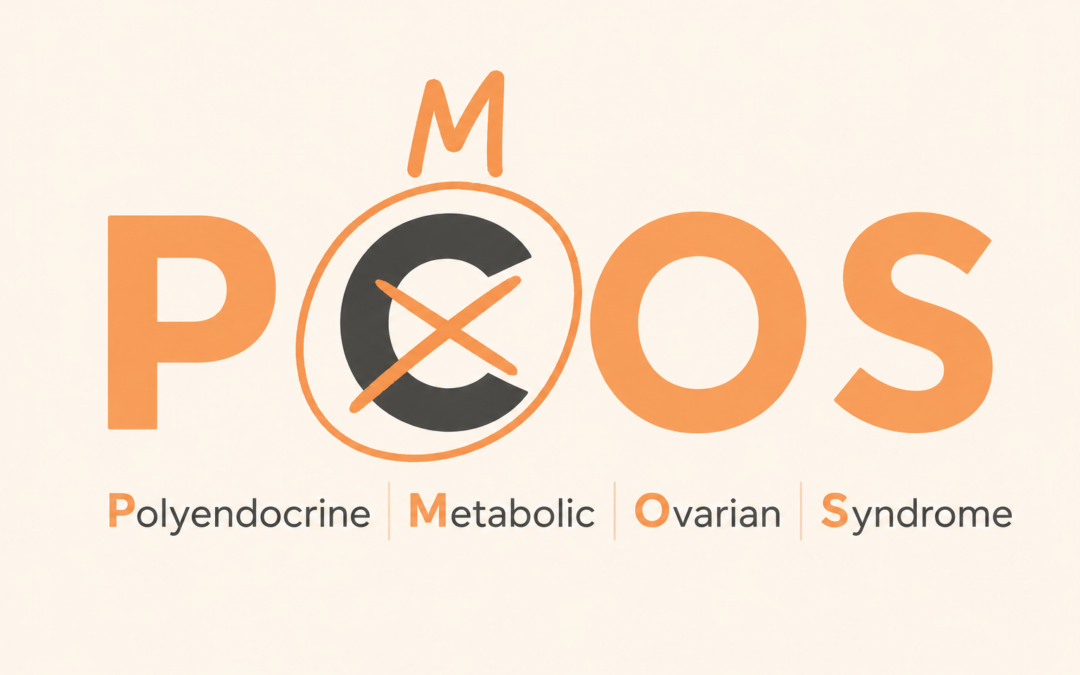
PCOS becomes Polyendocrine Metabolic Ovarian Syndrome
PCOS becomes Polyendocrine Metabolic Ovarian Syndrome
The big news you may have missed in the PCOS world is that the condition has officially been renamed. Per a recent publication in The Lancet, the new name is Polyendocrine Metabolic Ovarian Syndrome (PMOS). Yes, it’s now 15 syllables instead of 9 — a bit of a mouthful — but the updated name does a much better job of reflecting how this condition can affect the entire body and mind across the lifespan. The former name made it far too easy to assume this was strictly a reproductive condition that only mattered during the childbearing years. That assumption has been wildly inaccurate and has contributed to delayed diagnoses, inadequate treatment, and years of frustration for many people living with the syndrome. Personally, I’m willing to get a little tongue-tied if it means people receive more accurate, timely, and comprehensive care. And hopefully, more funding for the research this condition has long deserved.
The “polycystic” part of PCOS was also somewhat misleading from the start. True ovarian cysts were not necessarily present. What providers may have seen — or not seen — were immature follicles arranged in a pattern sometimes described as a “string of pearls.” Because PMOS has historically been under-researched and poorly understood, many clinicians relied too heavily on ultrasound findings as a benchmark for diagnosis. The problem? Not all individuals with the condition ever presented with those classic ovarian findings to begin with, while many of the metabolic, physical, and mental health impacts were minimized or overlooked entirely. Shifting to a name that acknowledges the syndrome’s multisystem nature is a much more inclusive and medically accurate approach.
This rebrand may take some getting used to, but it is also an exciting step forward. Including the metabolic component shines a light on a long-underrecognized aspect of PMOS, including insulin resistance, abnormal lipid levels, and increased cardiometabolic risk. If you’ve struggled with symptoms consistent with PMOS but never quite checked every box required for a diagnosis, this may be the right time to revisit the conversation with your healthcare provider and pursue a reevaluation. You may finally receive the attention and support you deserve. As a registered dietitian specializing in PMOS, I help clients navigate sustainable lifestyle changes that address the many facets of the condition so they can feel healthier, more energized, and more comfortable in their own skin.